
आध्यात्मिक महत्व
Spiritual and Historical Significance of Asthi Visarjan in Hinduism
In Hindu belief, salvation (Mukti) of the soul is deeply tied to the ritual of Asthi Visarjan—the immersion of the ashes and bones (Asthi) of the deceased in a holy river, most notably the Ganga. This practice is not merely symbolic but is rooted in ancient scriptures and legends that emphasize the sanctity and purifying power of the Ganga.
The Legend of Bhagirath and Ganga’s Descent
The story begins with King Sagar, a powerful monarch who had 60,000 sons. To ascend to the throne of Indra, the king of heaven, he undertook the grand ritual of 100 Ashvamedha Yagyas. After completing 99, the gods, fearing his success, stole the sacrificial horse and hid it in the hermitage of Sage Kapil.
When Sagar’s sons found the horse there, they accused and attacked the sage, who, in his wrath, reduced them to ashes. Their souls remained restless, unable to attain peace due to their untimely and violent deaths.
Anshuman, Sagar’s grandson, sought forgiveness and a way to liberate their souls. Sage Kapil revealed that only the touch of Devi Ganga, then flowing in the heavens, could grant them salvation.
Shiva agreed and caught Ganga in his matted locks, releasing her gently to flow on earth. Ganga followed Bhagirath’s chariot from Gangotri to Gangasagar, purifying the ashes of Sagar’s sons and granting them Mukti
Thus, Ganga earned names like Bhagirathi, Jahnavi, and Sursari, and the ritual of Asthi Visarjan became a sacred duty for Hindus, symbolizing the final journey of the soul toward liberation.
The Ganga (Ganges River)

Divine Origin and Purity
Ganga is believed to have originated from the heavens, flowing from the feet of Lord Vishnu, and brought to earth by King Bhagirath.
Her descent symbolizes divine intervention and grace, making her waters sacred and purifying.

Symbol of Moksha (Liberation)
Bathing in or immersing ashes in the Ganga is believed to cleanse sins and grant Mukti (salvation).
She is seen as a pathway to liberation, helping souls transcend the cycle of birth and death.

Feminine Divine Energy
Ganga is personified as a goddess, embodying Shakti (divine feminine energy).
She is nurturing yet powerful, capable of both sustaining life and washing away karmic burdens.
Flow of Life and Dharma
Her continuous flow from the Himalayas to the Bay of Bengal symbolizes the journey of life, with its ups and downs.
Ganga's path reflects the principle of Dharma—moving forward with purpose, nourishing all beings along the way.
Connection to Ancestors and Rituals
Ganga is central to ancestral rites like Asthi Visarjan and Pind Daan, believed to help ancestors attain peace.
She serves as a bridge between the material and spiritual realms, connecting the living with the departed.
Cleansing of Sins
Her waters are considered spiritually cleansing, removing sins and impurities not just physically but karmically.
Pilgrims seek her blessings to start anew, symbolizing rebirth and renewal.
पवित्र अनुष्ठान
Ganga's Role in Hindu Rituals
Ganga plays a central role in Hindu rituals, especially those related to purification, death rites, and spiritual renewal
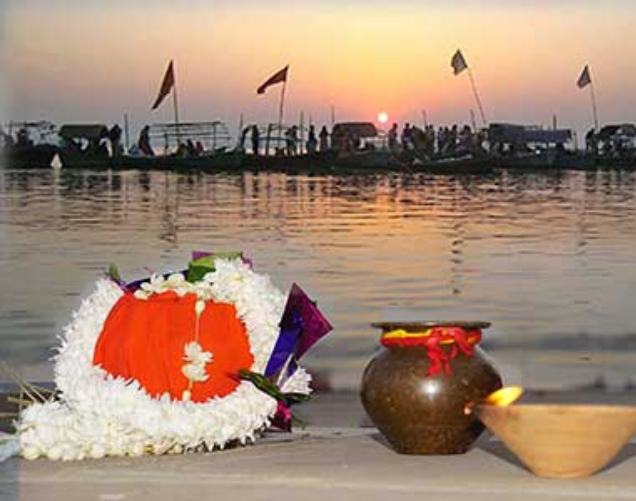
Asthi Visarjan (Immersion of Ashes)
Description
After cremation, the ashes (asthi) of the deceased are immersed in the Ganga.
Significance
This ritual is believed to liberate the soul from earthly bonds and help it attain moksha (salvation).
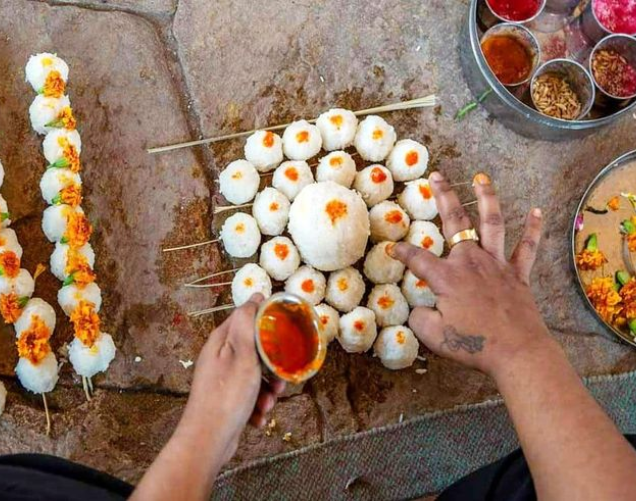
Pind Daan (Offering to Ancestors)
Description
Performed on the banks of the Ganga, especially in places like Varanasi, Haridwar, and Gaya.
Significance
It involves offering rice balls (pindas) to ancestors to ensure their peace in the afterlife.
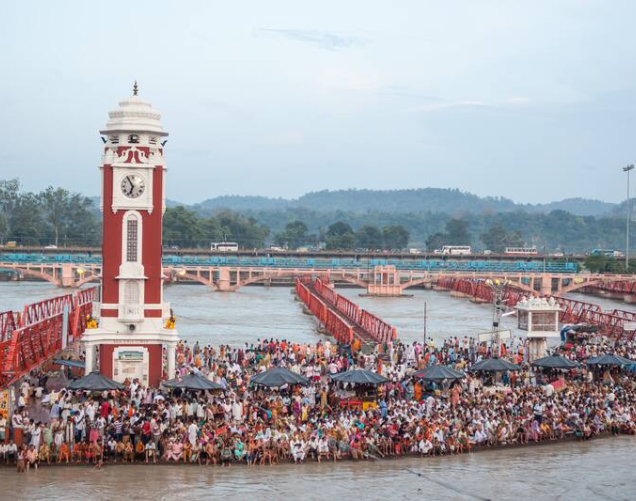
Snan (Holy Bath)
Description
Bathing in the Ganga is a spiritual cleansing ritual, believed to wash away sins and negative karma.
Significance
Pilgrims take a dip during festivals like Kumbh Mela, Ganga Dussehra, and Makar Sankranti.
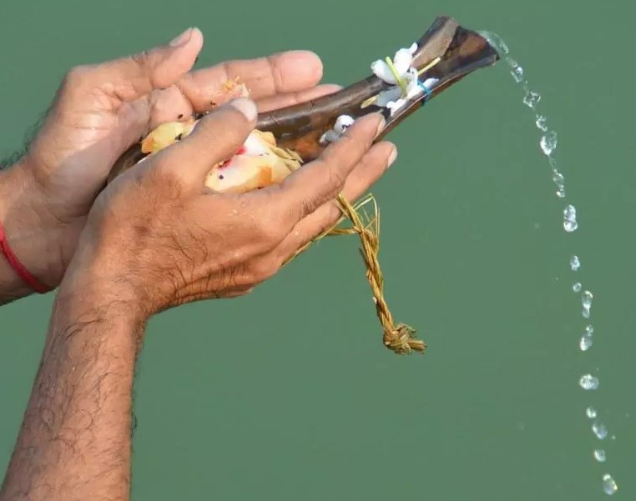
Tarpan (Water Offering)
Description
Devotees offer water from the Ganga to ancestors and deities.
Significance
It's a gesture of gratitude and remembrance, often performed during Pitru Paksha.
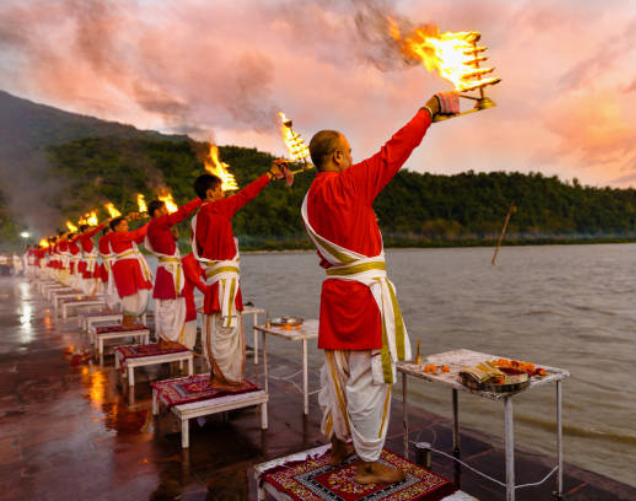
Daily Worship and Ritual Use
Description
Ganga water (Gangajal) is used in daily pujas, abhishekas (ritual bathing of deities), and home sanctification.
Significance
It is sprinkled in homes and temples to purify spaces and invite divine blessings.
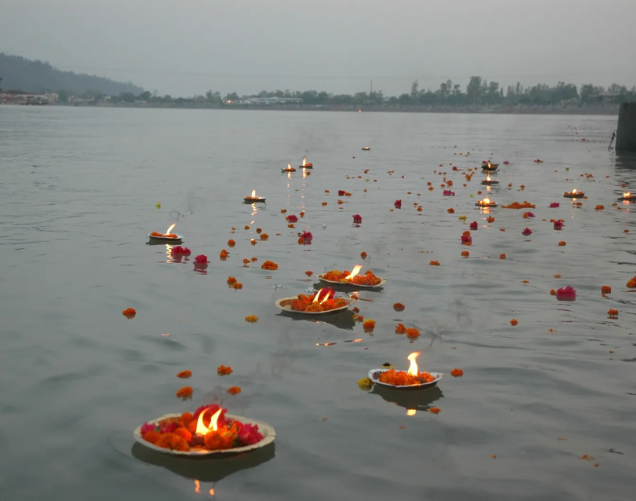
Festivals and Celebrations
Description
During Ganga Dussehra, devotees celebrate her descent to earth and perform rituals to honor her.
Significance
Lamps (diyas) are floated on the river, symbolizing light, hope, and devotion.
What is Asthi Visarjan?
Asthi Visarjan is a ritual performed after the cremation of a dead person. Asthi stands for leftover bones and ashes of the dead person. Visarjan means immersion. Therefore, the entire term stands for the immersion of the bones and ashes of the dead person. The ashes are usually immersed in the holy Ganga river.
It is believed that immersing the ashes and leftover bones of the dead in the river Ganga is sacred. Asthi Visarjan should be performed properly, or it is believed that the soul of the dead will never be able to rest once it leaves the material body.
Return to the Five Elements
Performing asthi visarjan ensures that the elements of the material body reduce to basic elements. The body is made of five elements: Earth, Air, Fire, Water, and Ether. On cremation, the body merges with these five elements, and whatever is left, the bones and ashes, have to be turned into peaceful places, hence the asthi visarjan.
Liberation of the Soul
When the soul leaves the mortal body, it moves to its new life and embarks on a new journey of life. However, it is believed that the soul will never truly be able to embark on the new if the old body is not cremated properly. Moreover, the asthi visarjan ensures that the elements of the body mix into the nature from which it emerges.
Completing the Circle of Life
Therefore, performing asthi visarjan ensures that human life has completed one circle by returning to the elements from which it is made.
Performing asthi visarjan ensures that the elements of the material body reduce to basic elements. The body is made of five elements, Earth, Air, Fire, Water, and Ether. On cremation, the body merges with these five elements, and whatever is left, the bones and ashes, have to be turned into peaceful places, hence the asthi visarjan.
When the soul leaves the mortal body, it moves to its new life and embarks on a new journey of life. However, it is believed that the soul will never truly be able to embark on the new if the old body is not cremated properly. Moreover, the asthi visarjan ensures that the elements of the body mix into the nature from which it emerges
Therefore, performing asthi visarjan ensures that human life has completed one circle by returning to the elements from which it is made.
Death can be an emotional time in a person’s life. Therefore, preparing for Asthi Visarjan during this time can be tough as many people don’t know how to prepare for it. However attendent at cremation ground can help you collect the Asthi after creation is cremation fire is slient. Make sure you carry milk to put on the Asthi's (Bones remains) to cool it down at the time of Asthi collection. Use earthen pot or kalash with lid in which you will collect the Asthi or leftover remains of and red cloth to properly cover and close. Please remember that
- 1. Asthis visarjan is a time bout activity and should be completed latest before 10th day of the cremation.
- 2. Asthis should not be taken back to home from cemetery as per Garun Puran.
- 3. In case family is requried to store Asthi for some time before its visarjan for any reason please store in cemetery ground, cemetery attended can help with the same.
Choosing the right location for Asthi Visarjan is exceptionally crucial. The asthi is usually immersed in Ganga as it is considered sacred. Therefore, they usually prefer to perform Asthi Visarjan in Haridwar, Prayagraj (Sangam) and Varanasi.
Asthi Visarjan Procedure
The procedure of Asthi Visarjan typically includes the following steps:
- Performing the Shradh ceremony: The Shradh ceremony is a Hindu ritual to honour and pay respect to the ancestors and deceased loved ones. It is usually performed before Asthi Visarjan.
- Preparing the ashes for immersion: The ashes are collected and placed in a biodegradable container, such as a bamboo basket or an urn made of clay.
- Traveling to the location for Asthi Visarjan: The location for Asthi Visarjan is usually a sacred river, such as the Ganges River in India.
- Performing the puja for Asthi Visarjan: A puja, or religious ceremony, is performed to honour and pay the deceased’s respect. Offerings such as flowers, fruits, and rice may be made, and prayers may be recited.
- Immersing the ashes in the sacred river: The ashes are then immersed in the sacred water, symbolizing the soul’s release from the physical body and its journey to the afterlife.
Asthi Visarjan is usually performed three days after the day of cremation and before the 13th day.
Followers of the Hindu religion of the deceased’s family or representative are allowed to perform the Asthi Visarjan. The family must perform the Asthi Visarjan for the aatma to achieve Moksha. Asthi Visarjan is one of the most important rituals in the Hindu religion, as seen above, which is why it is crucial to take the help of only Pandits. They are aware of rituals and traditions and can therefore perform them properly.
Here are a few things that you should not be doing while performing the Asthi Visarjan:
- Never miss out on performing the Asthi Visarjan within time.
- Never miss out on any one ritual while performing the Asthi Visarjan, or it will lead to the soul of the deceased suffering.